How AI is Transforming Biology Education for Students in 2026
Why trending: AI is becoming a core part of education systems and curriculum. (Forbes)
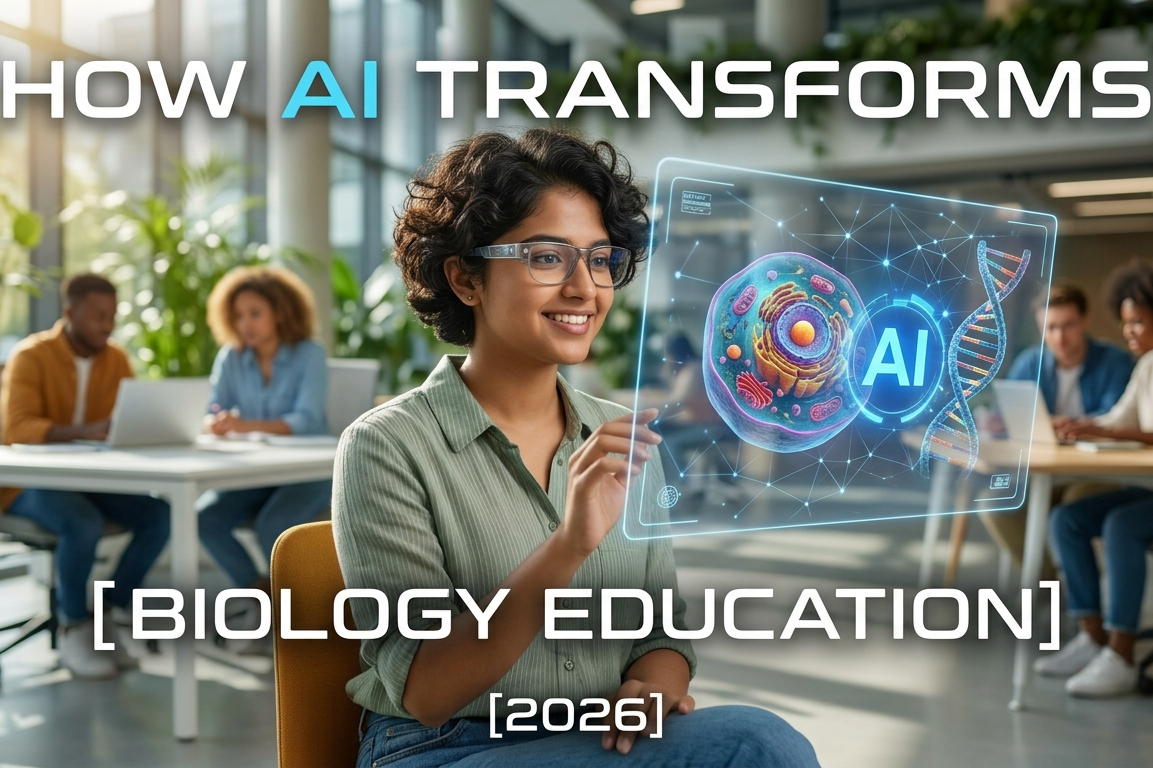
The world of biology education is changing rapidly, driven by incredible advances in artificial intelligence. Moreover, the traditional classroom setup, which often felt rigid, is now evolving into a dynamic, personalized learning environment. Students in 2026 are experiencing science like never before, largely due to AI in biology education becoming an integral part of their curriculum. This technology isn’t just an add-on; in fact, it is fundamental. Therefore, understanding these shifts is crucial for anyone involved in modern education. In this blog, we will explore how AI is personalizing the way students engage with complex biological concepts and enhancing their practical skills.
Moreover, this transformation means that learning is becoming more tailored to individual needs. Consequently, the standard ‘one-size-fits-all’ model is quickly becoming obsolete in many schools. As a result, students often find themselves more engaged and less overwhelmed by challenging material.
A New Chapter in Personalized Biology Learning
One of the most significant changes is personalized biology learning. Therefore, students no longer have to advance at the exact same pace as their peers. Instead, AI systems can analyze a student’s performance in real-time. Moreover, if a student struggles with genetics, the system can instantly provide extra resources. For example, it might suggest a specific animation or a targeted quiz, ensuring mastery before moving on. As a result, students can grasp difficult concepts more effectively, and no one is left behind.
In addition, this level of customization fosters a deeper interest in the subject. Consequently, learners feel more supported and motivated, rather than frustrated by material they find too easy or too hard. Furthermore, this approach empowers educators to focus their efforts on high-impact interventions. Therefore, teachers can spend less time on routine grading and more time on mentoring students who need critical support, improving overall classroom efficiency.
The Advantages of Adaptive Platforms
- Content that adapts instantly to individual progress.
- Immediate feedback loops that clarify common misunderstandings.
- Customized study plans that optimize learning time.
Intelligent Support: AI Tutors for Biology
Imagine having a supportive expert available 2026. In addition, this isn’t just science fiction; smart AI tutors are providing around-the-clock guidance for biology students. As a result, if a student is confused about the Krebs cycle at 11 PM, they can access immediate clarification. Consequently, they don’t have to wait until the next class to resolve their confusion. Moreover, these AI assistants are designed to ask guiding questions rather than simply providing answers. Therefore, they encourage critical thinking and deeper understanding, just like a human mentor.
In addition, these tutors can track a student’s progress and identify specific weaknesses. Consequently, they can tailor their questioning and support to address those areas. Furthermore, this continuous feedback loop ensures that students are constantly improving. Therefore, the combination of personalized learning platforms and on-demand AI tutors is revolutionizing biology support systems.
How AI Tutors Provide Support
- On-demand, 24/7 availability for conceptual guidance.
- Guiding questions that promote active recall and critical scientific thought.
- Seamless integration with existing personalized biology learning dashboards.
Step Inside the Science: The Virtual Biology Lab
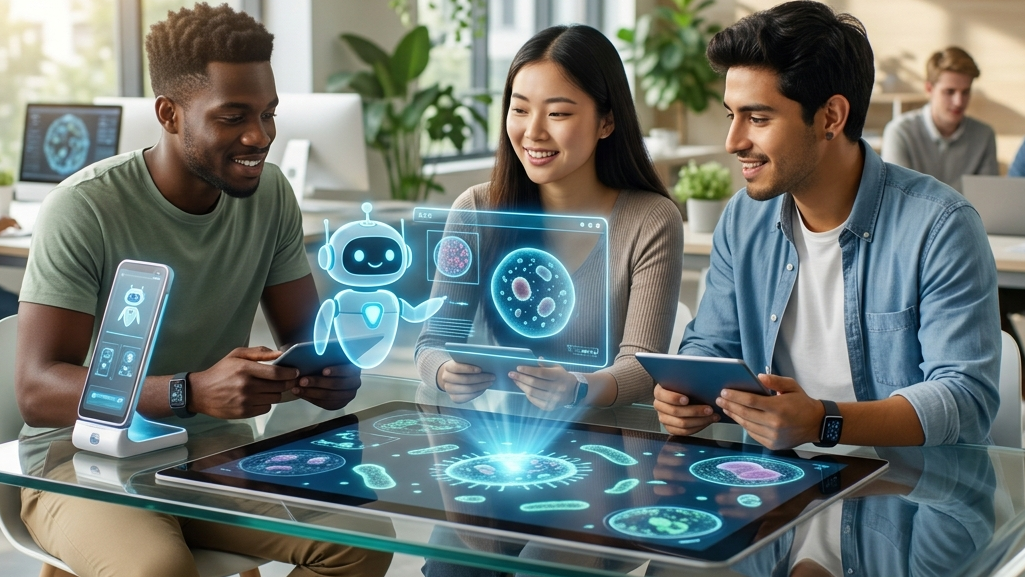
The traditional lab experience is also getting a serious upgrade. Consequently, students can now conduct experiments in a risk-free virtual biology lab, powered by advanced AI simulations. As a result, complex procedures, like CRISPR gene editing or long-term ecological monitoring, are accessible without specialized, expensive equipment. Moreover, students can make mistakes—such as accidentally contaminating a sample—and see the real consequences, without incurring actual costs or safety risks. Therefore, they can safely refine their techniques.
In addition, these virtual spaces break down geographical barriers. Therefore, a student in a remote area can access the same advanced simulations as one in a well-funded urban school. Furthermore, these experiences are immersive. Consequently, they transform abstract concepts into tangible, visual interactions, dramatically improving understanding and retention.
The Potential of Virtual Labs
- Safe, consequence-free experimentation environment for complex biological processes.
- Access to advanced protocols like gene sequencing and protein folding.
- Visualizing invisible processes, such as cellular respiration or nerve signaling, in real-time.
Data-Driven Insights: Empowering Biology Educators
While students benefit directly, AI is also a game-changer for biology teachers. In addition, it provides unprecedented visibility into classroom learning dynamics. As a result, educators can quickly identify which concepts are causing the most confusion across the entire class. Furthermore, they can access detailed analytics on individual student progress within their personalized biology learning paths. Therefore, this data isn’t meant to replace teachers; instead, it empowers them to be more effective.
Moreover, by automating administrative tasks like grading quizzes and managing basic queries through AI tutors, teachers reclaim valuable time. Consequently, they can dedicate more energy to high-value activities, such as fostering critical discussion, mentoring student research projects, and providing emotional support. Therefore, AI acts as a powerful force multiplier for dedicated educators.
Empowering Teachers with Analytics
- Identifying class-wide conceptual bottlenecks in real-time.
- Tracking individual engagement and progress in personalized pathways.
- Automating routine grading to focus on impactful mentorship.
Conclusion: A Bright Future for Biology Students
In conclusion, the integration of AI in biology education by 2026 is creating a more personalized, accessible, and engaging experience for students. Furthermore, tools like intelligent AI tutors and immersive virtual biology labs are making complex scientific concepts more understandable and practical skills easier to master. Therefore, these changes are not just about new technology; in fact, they are about fostering a deeper understanding and love for the science of life. As a result, students are better prepared for future scientific challenges. Ultimately, the future of biology education looks incredibly bright.
Frequently Asked Questions (FAQs)
Q1: Will AI replace biology teachers?
No, absolutely not. In fact, AI is designed to empower teachers, not replace them. Moreover, by automating routine tasks and providing data insights, AI allows educators to focus on mentorship, high-level discussions, and supporting individual student needs. Therefore, the teacher’s role becomes more, not less, critical.
Q2: How accurate are AI tutors for biology?
AI tutors are becoming highly accurate. Therefore, they are trained on vast datasets of verified scientific information and educational content. Furthermore, they are continuously updated. However, it’s always good practice for students to cross-reference information and consult their primary teacher for complex interpretations.
Q3: Are these AI tools expensive for schools to implement?
Costs vary. In addition, while some advanced platforms have licensing fees, many innovative tools and simulations are becoming more affordable. Furthermore, over time, they can reduce expenses related to physical lab supplies and textbooks. Consequently, many educational systems view them as a crucial, cost-effective investment in student success.
Q4: How does AI ensure student data privacy?
Privacy is a top priority. Consequently, reputable educational AI companies must adhere to strict data protection regulations (like GDPR or COPPA). Furthermore, schools carefully vet these platforms to ensure student data is anonymous and secure, used only to enhance the learning experience.